

A Year Without A Summer
Lesley Bungay is in The Book Room for May 2026


Congratulations to Lesley Bungay, whose debut novel, A Year Without A Summer, publishes this month with Barnard Publishing Ltd. I’ve known Lesley for some time now as a fellow writer and have loved following her journey to publication. It’s with so much pleasure that I hand over to her to tell us about her book and her publishing journey.
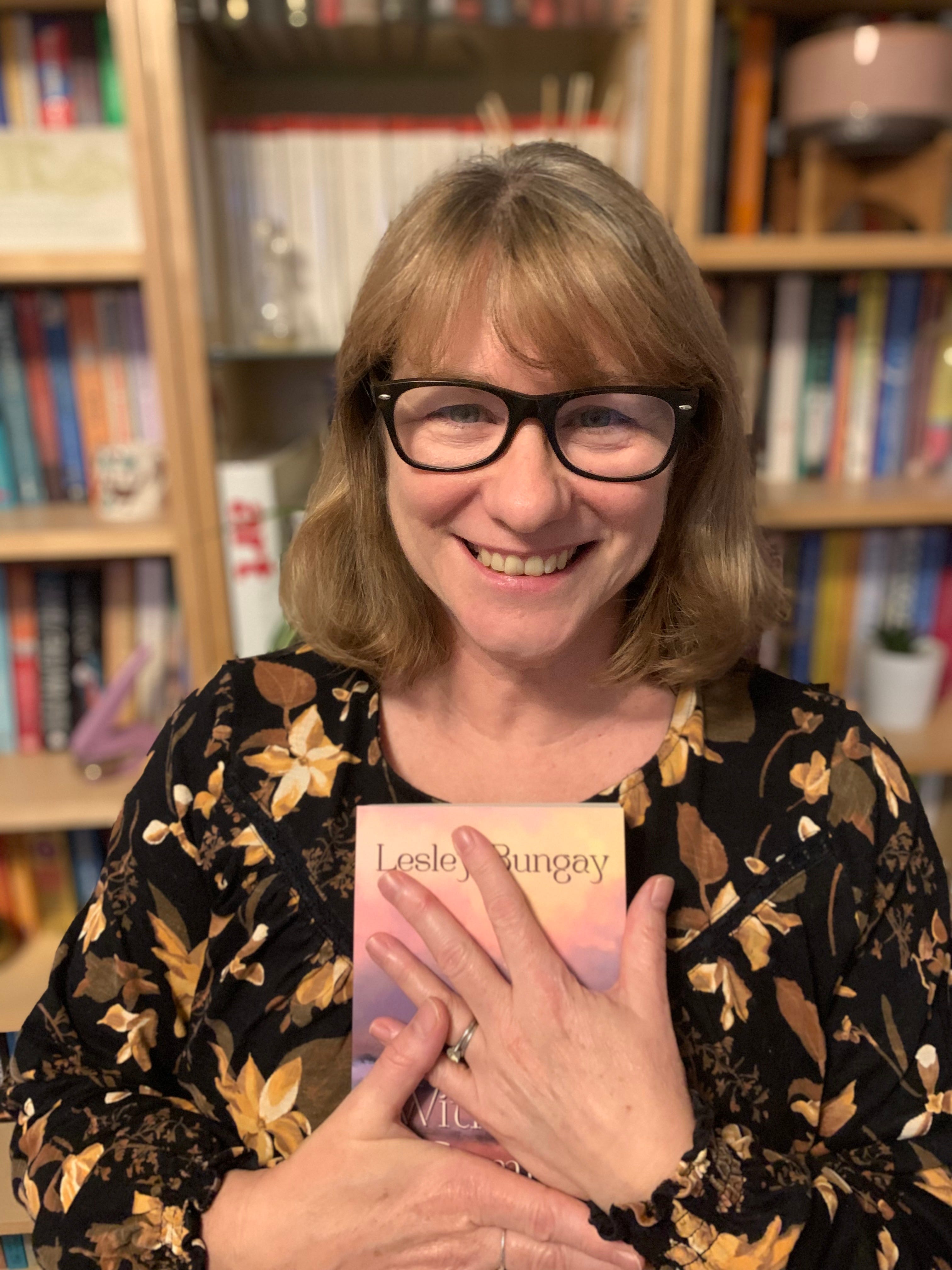
A Year Without Summer by Lesley Bungay.
From an early age I was fascinated by books. The school library was my favourite place to be where I loved finding out facts as well as reading stories. Those by Enid Blyton, Jack London, and Richard Adams were amongst my favourites. I grew up in the northeast and now live in Hampshire, with a view of Watership Down a short walk from my front door. It’s still one of my all-time favourite books.
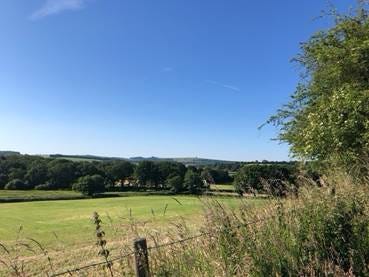
I was a daydreamer, constantly making up stories in my head, although I never thought to write them down. Whoever I believed these mysterious authors to be, they were not people like me.
It wasn’t until 2006 and well into my thirties that I started putting pen to paper in a creative way. I was almost finished with a degree in English Language and Literature with the Open University and needed to complete one final module. Creative Writing was a brand new course – with no exam!
I had no idea what to expect, but quickly found the writer in me emerging. I rekindled my love of stories and started to play with words and ideas to see where they might take me.
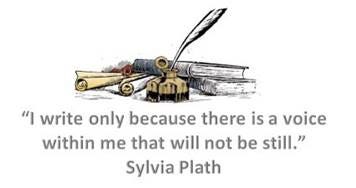
When I found this quote, I thought – that’s me too!
Tell us about your writing process and anything you have learnt along the way?
I do try to write something most days and often use word prompts to generate ideas. Facing a blank page is daunting so the simple act of writing one or two words can help to get the pen moving or fingers tapping. The #vss365 community (now on BlueSky) encourages me to write a very short story 365 days a year (almost). Many of these ideas have developed into micro or flash fictions with a few scattered around the web on sites like 101 Words, 50 Word stories, Paragraph Planet and Cranked Anvil. There’s a joy to distilling an idea into only a few sentences and it’s great for developing editing skills too.
Sometimes an idea for a short story comes fully formed and I can have a draft in a few hours. Other times an idea might percolate through my mind for months before its ready to share itself with me. Either way, there’s no better feeling than the moment those words begin to flow.
Writing novels is definitely a marathon and not a sprint. I need a lot of thinking time to discover who my story is about and what their motivations are. Old buildings feature a lot in my stories as do different timelines so it takes a while for me to find my sense of place. I often know where I’m beginning and how the story ends, but the journey to that destination can be like walking through fog.
The author Rachel Joyce (The Unlikely Pilgrimage of Harold Fry) describes the first stages of writing a novel to “finding a house in the woods that has no windows and no doors. You long to go inside but you have no idea how, so all you can do is keep circling it, trying to find the tiniest crack.”
For me the cracks emerge when I’m researching. You can read about how I found the setting for my debut novel here: Finding a Setting: A Sense of Place for ‘The Year Without a Summer’
Where did the idea for your debut novel come from?
Once I’d completed the OU course, I had a handful of short stories and no plans to do anything with them. My aim at the time, was to become a teacher so the only thing I was writing for the next few years were lesson plans and reports. Although, I do remember thinking,
‘One day I might have an idea and then I will write a novel.’
That day came three years later when I signed up for a series of writing workshops at the Jane Austen House Museum in Chawton, Hampshire, run by Southampton based author and creative writing tutor, Rebecca Smith.
Rebecca wrote in her blog:
“There are yew trees in the garden… Recently somebody found a key hidden in one of these trees - a very old key - but nobody knows what it was for. It didn’t fit any of the doors. Could there be a secret door or a box hidden somewhere?” (October 18th 2009)
Now, I love a mooch around an old house. I’m intrigued by their history and the lives of former residents, but I always want to know what’s beyond those locked doors, to see the attic rooms. I was also fascinated by the idea that an ancient tree would know the secrets of those past lives – if only they could tell.
So there it was – an idea for a novel – a house, an old tree, a found key, and a potential secret to be revealed.
I knew immediately this would be a dual timeline story with a character from the present finding a key to unlock a character from the past, but who and how they were connected I’d yet to discover.
With the Jane Austen House providing the inspiration, the past timeline had be the Regency period, which was when I came across the year 1816.
It began with the eruption of a volcano, Mount Tambora, in Indonesia in 1815 which spewed a massive volume of ash into the stratosphere, blocking sunlight as it circled the globe. The resulting cooler temperatures and storms decimated crops across Europe the following summer. 1816 became known as the year without a summer – I had my title.
What themes do you cover?
I liked the idea of using the weather as a theme to reflect the story but wasn’t yet sure what that story would be. Time for more research.
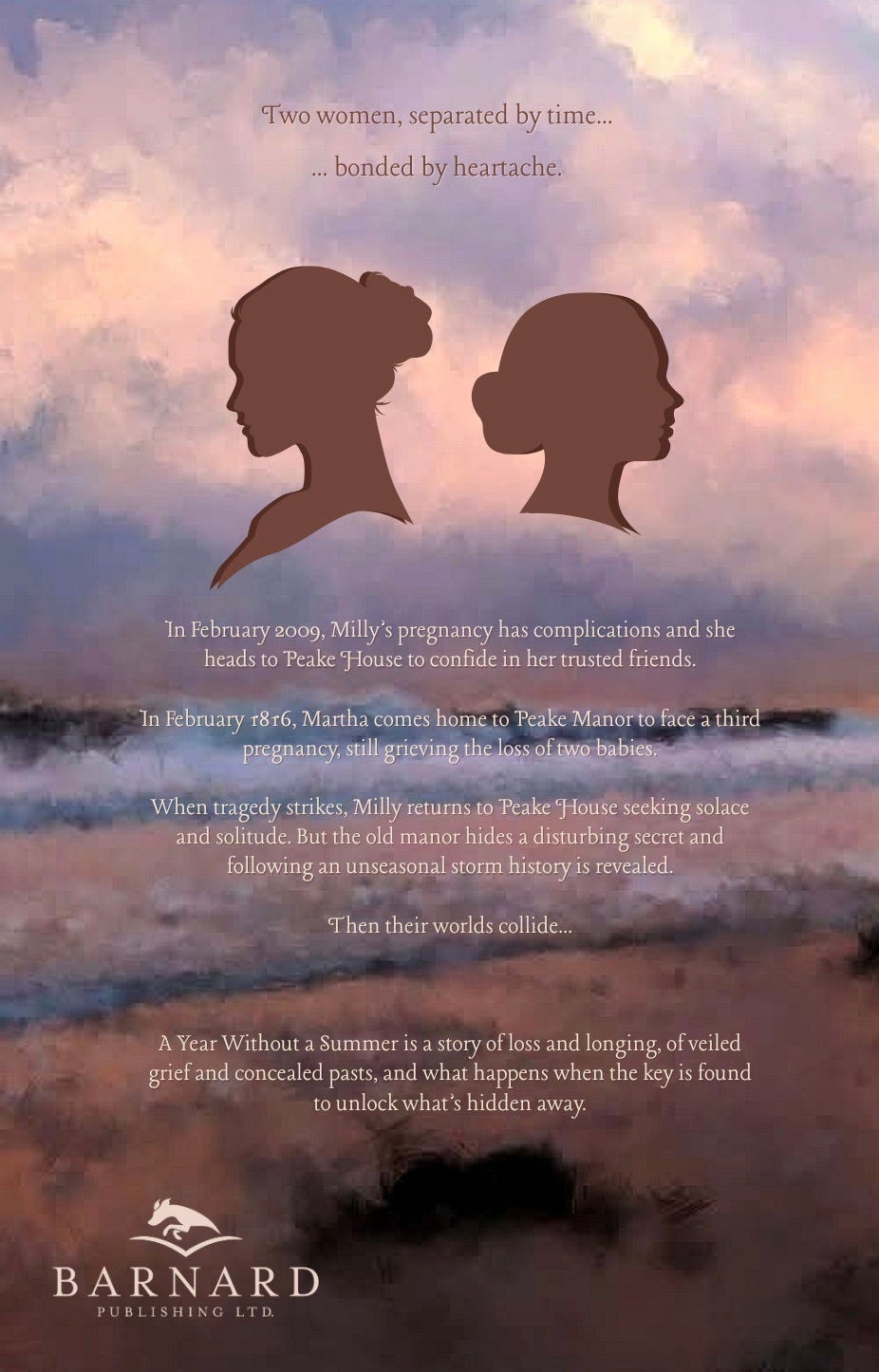
The Gentleman’s Daughter by Amanda Vickery became my guru as I delved into the lives of Regency women and it was reading a chapter titled “Fortitude and Resignation” that I realised how my characters needed to be connected. I wanted to write about the risks and rituals of pregnancy and childbirth across the centuries – to explore themes of motherhood, of longing and loss and in what ways experiences have changed, or remain the same, over time.
How was the journey to publication?
It’s been a long and very winding road to publication which I’ve been writing about in a series on my Substack.
Although I had the initial idea for the book back in 2009, there were many years when I wrote very little, although the characters were often in my thoughts and I’d jot down notes and random scenes. Then in 2019 I decided it was time to take my writing seriously. I submitted a few short stories and having three published in the first year was the boost I needed. When lockdown came in 2020, I knew I would never have another opportunity to prioritise my writing. By the end of the year with no summer (aptly) I completed a first draft.
I quickly realised the hard work was about to begin with rejection being part of the process. I had many positive comments from agents about the quality of my writing, but ultimately it wasn’t the right fit. I kept working on the manuscript, got feedback from beta readers and worked with a writing mentor.
Everyone told me you only need one ‘Yes’ and mine finally came at the beginning of 2023 when I signed with Intersaga Literary Agency Ltd It took another year to find a publisher, Barnard Publishing Ltd I’m immensely grateful to Anna and Becca for believing in my novel.
I read once that the difference between a published and unpublished writer is the published writer didn’t give up. I did not give up.
What was the hardest part?
With my first novel it took me a while to understand how books are written. Finding this quote from Terry Pratchett was a game changer for me.
“The first draft is just you telling yourself the story.”
I realised those books on my shelves that I was comparing my own writing to, had been through multiple edits. As Robert Graves said, “there’s no such thing as good writing, only good re-writing.”
So with my second novel I’m learning to scribble first and shape later.
How about marketing – any top tips?
Marketing and promoting your own work can be daunting – the most important thing for me is making connections with people who can help you find your readers.
Fellow writers – follow on social media, join local groups, go to events and meet in real life if you can. Support them and they’ll support you back.
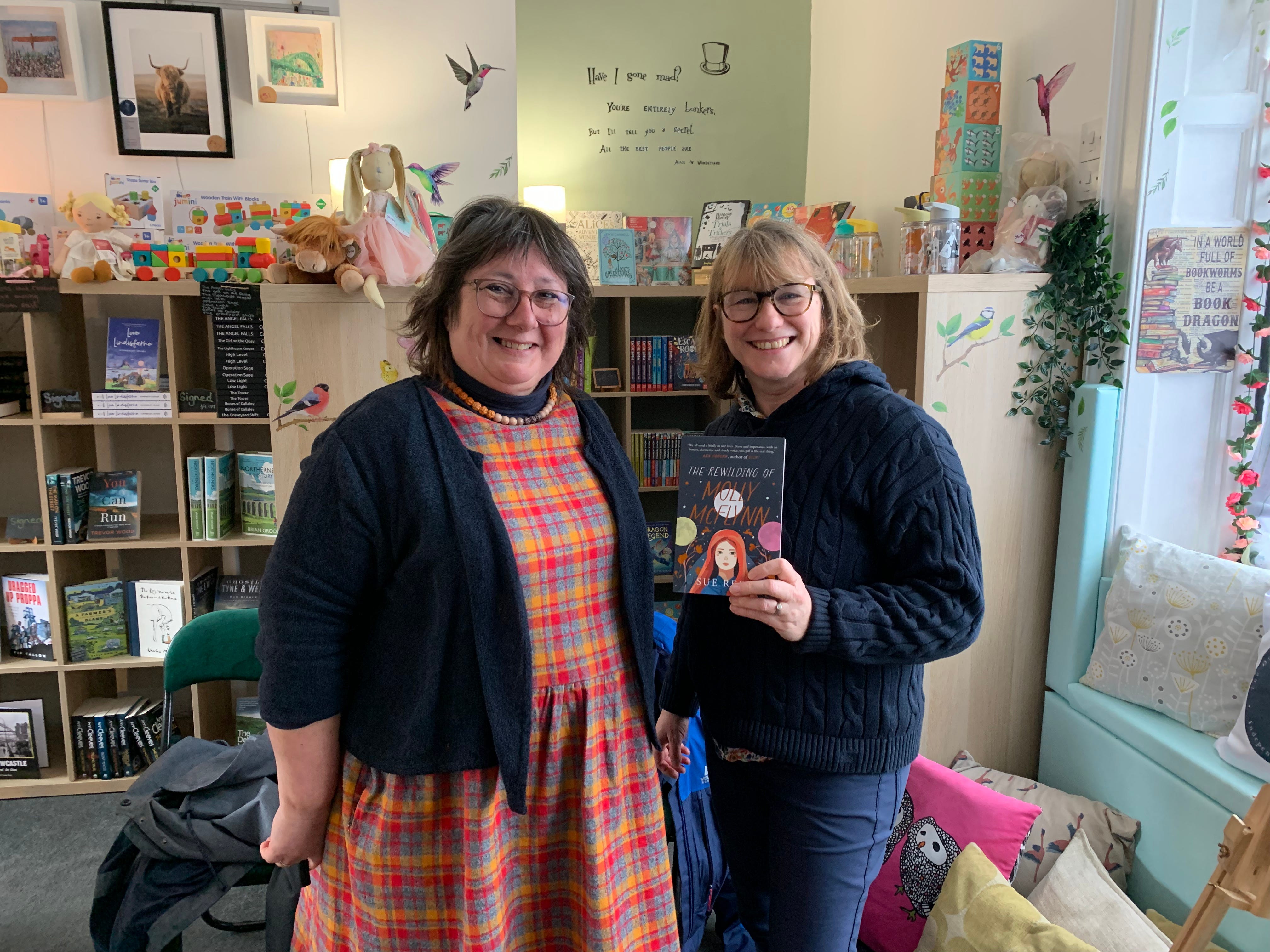
Your local independent bookshops – pop in for a chat, buy a book, support their author events, build a relationship.
Your local library – support their events, offer to give a talk or run a workshop.
Local groups, such as reading groups or the Women’s Institute, who welcome authors to give talks.
What would you say to someone starting on their writing journey?
Everybody’s path is different and you have to find out what works for you. But for what it’s worth here are my thoughts:
Ditch the “aspiring”, if you write then you are a writer.
Learn about the craft of writing. Emma Darwin’s This Itch of Writing was my go-to when I first started. Write your Way is a new online creative writing school in partnership with Goldfinch Books aiming to provide free or low cost talks and workshops to support writers at all stages.
Be playful with words and ideas. Experiment with different forms and genres. It’s all part of practicing the craft. Try writing flash or micro fiction; it’s great for honing your editing skills.
Remember – scribble first, shape later.
Find your tribe, whether face-to-face or online, because writers are the most supportive and encouraging bunch of people I have ever met. They will have your back when the doubts creep in.
If you want to be published – find out about publishing. There are many options. Workout which is best for you and your book.
Be patient. Be determined. Be bloody minded at times!
But Don’t Give Up.
Where can we buy your book and follow you?
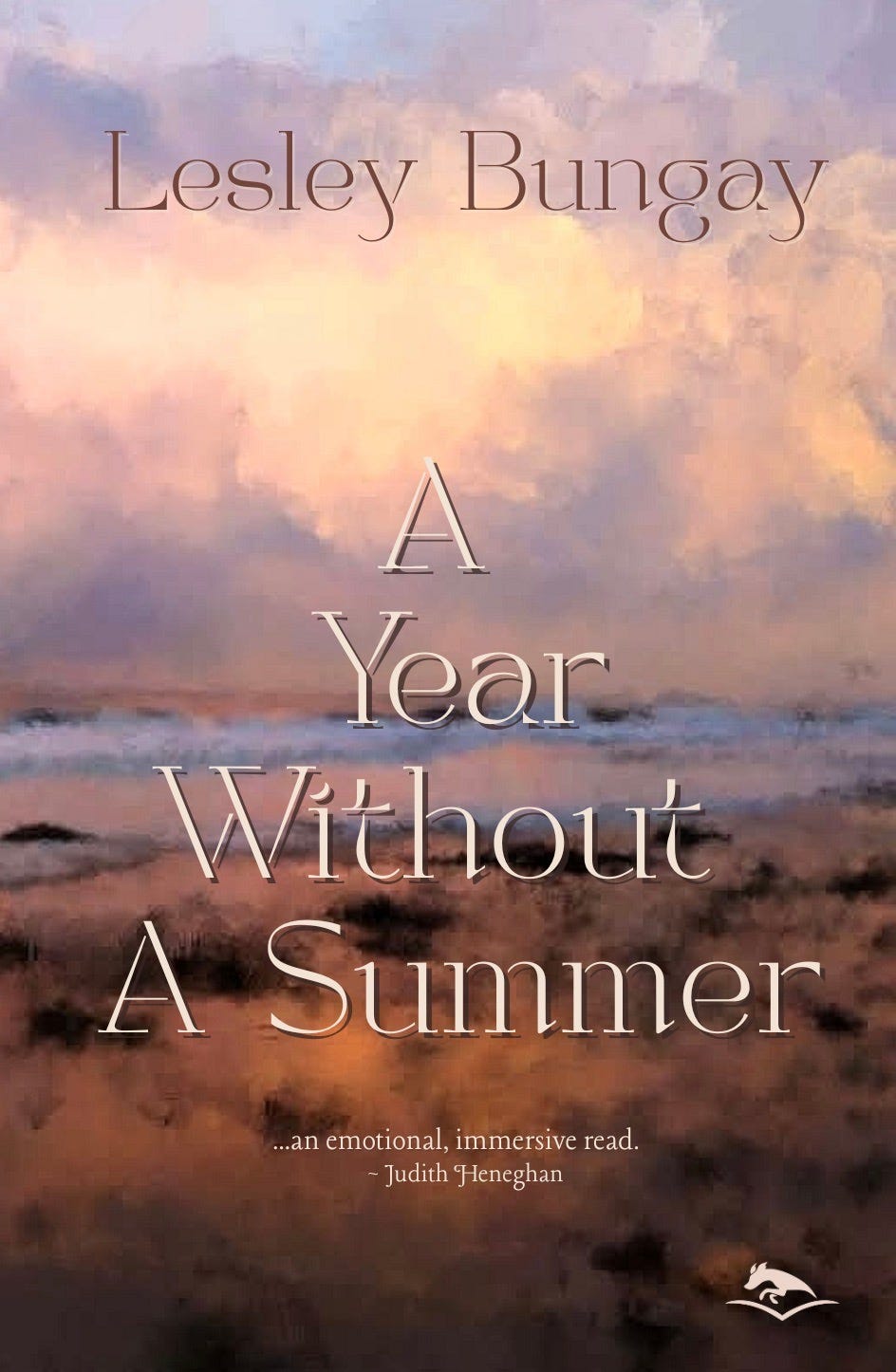
A Year Without A Summer is published by Barnard Publishing Ltd You can buy copies direct from the publisher or through any bookshop. Of course, I’d love you to support an independent bookshop, but if you don’t have one nearby then try Bookshop.org.
And I’m on Instagram & Bluesky: @lesleyjayneb
And Facebook as Lesley Bungay Author
Huge thanks to Lesley for co-authoring this post from The Book Room. If you have a book coming out, or one you’d like a spotlight on, then so get in touch. I’ve a couple of slots left for the end of the year, and am taking bookings for 2027.

 | A guest post by
|
Loved having you in The Book Room, Lesley 🤩
Thank you once again, Sue, for all your support 🥰