

Fallout
Eleanor Anstruther is in The Book Room


Welcome to April’s edition of The Book Room. I’m thrilled to have Eleanor Anstruther here, talking about her latest book FALLOUT, which is being published this week by Empress Editions, founded by Alisa Kennedy Jones.
I was lucky enough to get an early Net Galley copy of Fallout and devoured it in two days. Set against the backdrop of the Greenham Common Women’s Peace Camp, this is a dazzling, defiant coming-of-age novel where punk, protest, and unexpected love collide. When I read it, I thought, if ever there was a protagonist who would partner up with my Molly, it would be Bridget. Although who would be leading who astray is unclear, and I think that might be the same for Eleanor and me if we were to meet in real life.
There’s a Substack launch party on Thursday with Eleanor, which I’m going to - sign up HERE.
I asked Eleanor a few questions about FALLOUT and her writing process. Let’s see what she has to say.

What is your book about and what themes do you cover?
Fallout is “A punk-hearted coming-of-age novel of rebellion, love, and reinvention.” In the bleak winter of 1982, fifteen-year-old Bridget has had enough. Enough of Thatcher’s Britain, enough of being invisible, and enough of her family’s secrets. Armed with little more than a sharp tongue and a fierce sense of justice, she runs away from her suburban life to join the Greenham Common Women’s Peace Camp—one of the most iconic protest movements in British history. A fearless, darkly funny exploration of identity, family, and what happens when the personal becomes political.
Where did the idea for your book come from?
I never know where ideas come from. They just arrive.
What were your childhood/early experiences of books and writing?
I come from a family of writers, and my home was filled with books. Bookshelves were my natural habitat, and reading was my natural habit. I wrote from a very young age, well before I could spell or form sentences. These stories were written in squiggles in a little pink book. I knew what I was writing, but no one else did.
Tell us about your writing process and anything you have learned along the way.
I’m a very disciplined writer. When I have a new novel in process, I will write every day until I have that first draft nailed down. Redrafting is a steady, slow process, and I’ll do a lot of it. No one will see a new book until it’s been through many edits and is as good as I can make it. I know it will go through many more before it’s published. I read my work out loud to hear rhythm and sentence structure, and I’ll sit with a scene for as long as it takes to find the honesty in it. It’s all about feeling: the conscious and unconscious sensations of the characters and the tone of the story itself and being able to translate that to the page. I’m slow and steady. Experience has taught me that if I turn up each day, eventually a book will be written.
What is the hardest part?
Getting it right!
How was the journey to publication?
Long and arduous and eventually fruitful. Getting my first deal, standing on the balcony giving a speech at my first book launch, promoting that book at my first literary events, these were all as good as I imagined they’d be. I had a ball, and loved it, and was hooked and want to do it again and again. Having said that, the journey to publication is set with the same opportunity for over-focus as the journey to giving birth. All one tends to think about is publication day, when in truth it’s only the beginning of what will be, if you want it, a long career. And that career will not, I guarantee it, be a straight upward line of one success building nicely upon another. You haven’t made it once you’re published; you’re just published, and irrespective of your first book’s success, you will have to start all over again with the next one. If it was a huge hit, you’ll have to live up to it, and if it wasn’t, you’ll have to hustle for a deal. Neither scenario is easy. The literary life is a long road, and you have to be tough, determined, confident, grounded, light-hearted and deadly serious. It’s not for the faint-hearted.
How about marketing – any top tips?
Throw money at it! And be shameless. No one else (unless you pay them) is going to blow your trumpet for you. Manage expectations, believe in your work, build a professional network of honest relationships and promote others in your spare time. And do your research. The moment you start publicising a book, a million offers will come in to review it, all of which demand payment. If you’re an indie author, use the database on offer at ALLi to sort the dolphins from the sharks.
What would you say to someone starting on their writing journey?
Buckle up. Believe in your work. Study hard. Read constantly. Ask for help and invest in a good editor.
Where can we buy your book and follow you?
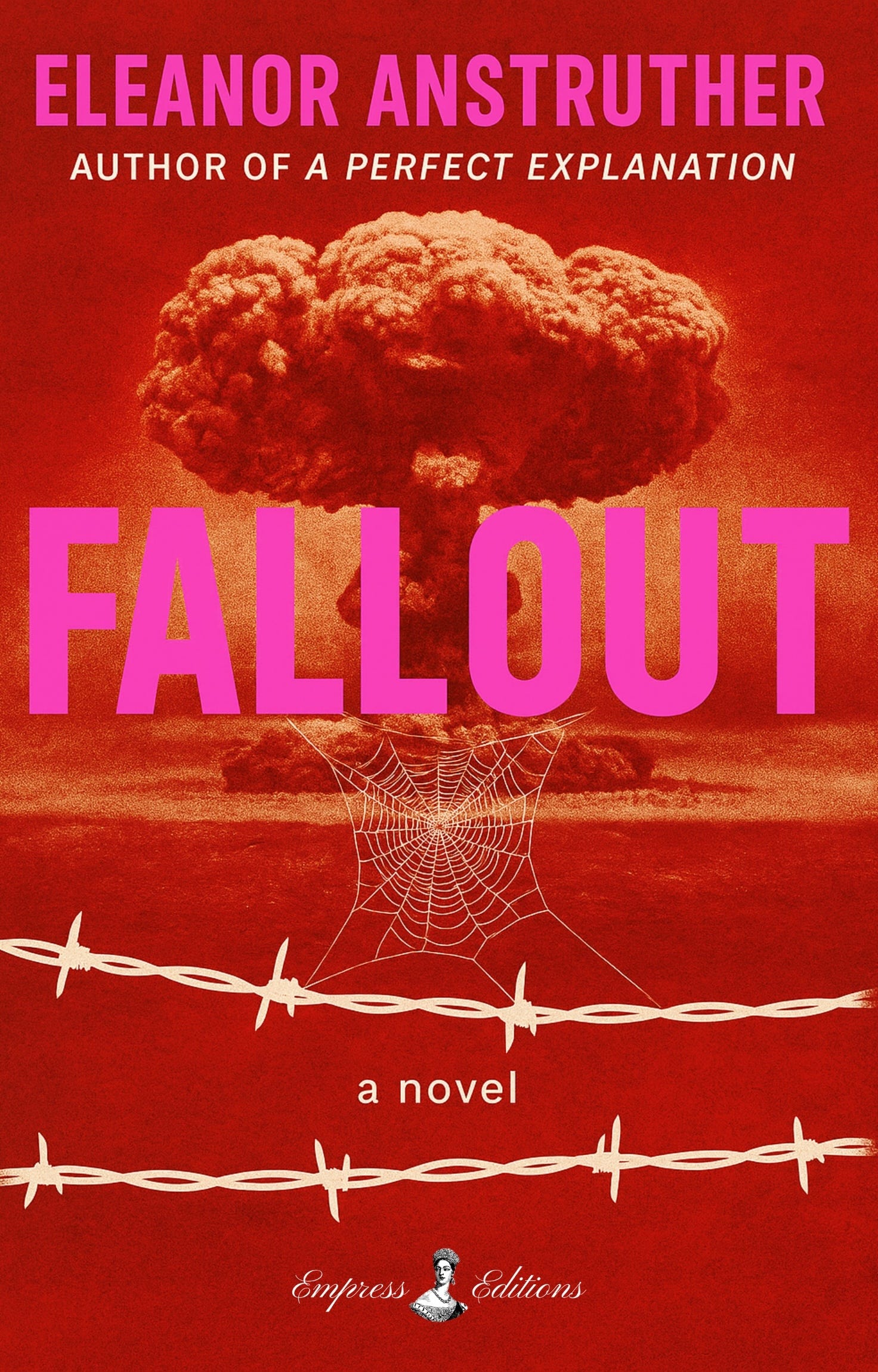
FALLOUT is available at all major stores and online throughout the US and UK:
Thanks to Eleanor for being my guest in The Book Room. You can follow her Substack publication, The Literary Obsessive here:

If you have a new book coming out, or if you have a book you’d like to shine a light on, do get in touch. The support given to me by the writing community has been nothing short of phenomenal, and this is a small way of giving some of that support back.
Thanks as ever for being here,

 | A guest post by
|
Ah, I’m at another book launch on Thursday otherwise I’d be there. I regularly walk on Greenham Common, as it is now restored to be. Although we didn’t live in the area at the time of the peace camp, I’m fascinated by its history. The control tower and silos are still there, as is part of the runway and a few concrete posts that bordered the perimeter with barbed wire fencing. I will definitely be adding this to my book list.
Added to my list. I sneaked off to Greenham from where I lived in London. Coachloads of women used to visit! It was such an iconic place. Funnily enough, when my parents retired, they moved just down the road from the base, which is now a nature reserve!