
Underdogs
Louise Powell is July's guest author in The Book Room

Hello, and welcome to The Book Room, a monthly space where I work collaboratively with authors who have new books coming out, or want to shine a light on something they’ve already written and published - whatever form that might take. The support I’ve received as I get my books out into the world has been amazing, and this is just my way of sharing the love and showing my appreciation.
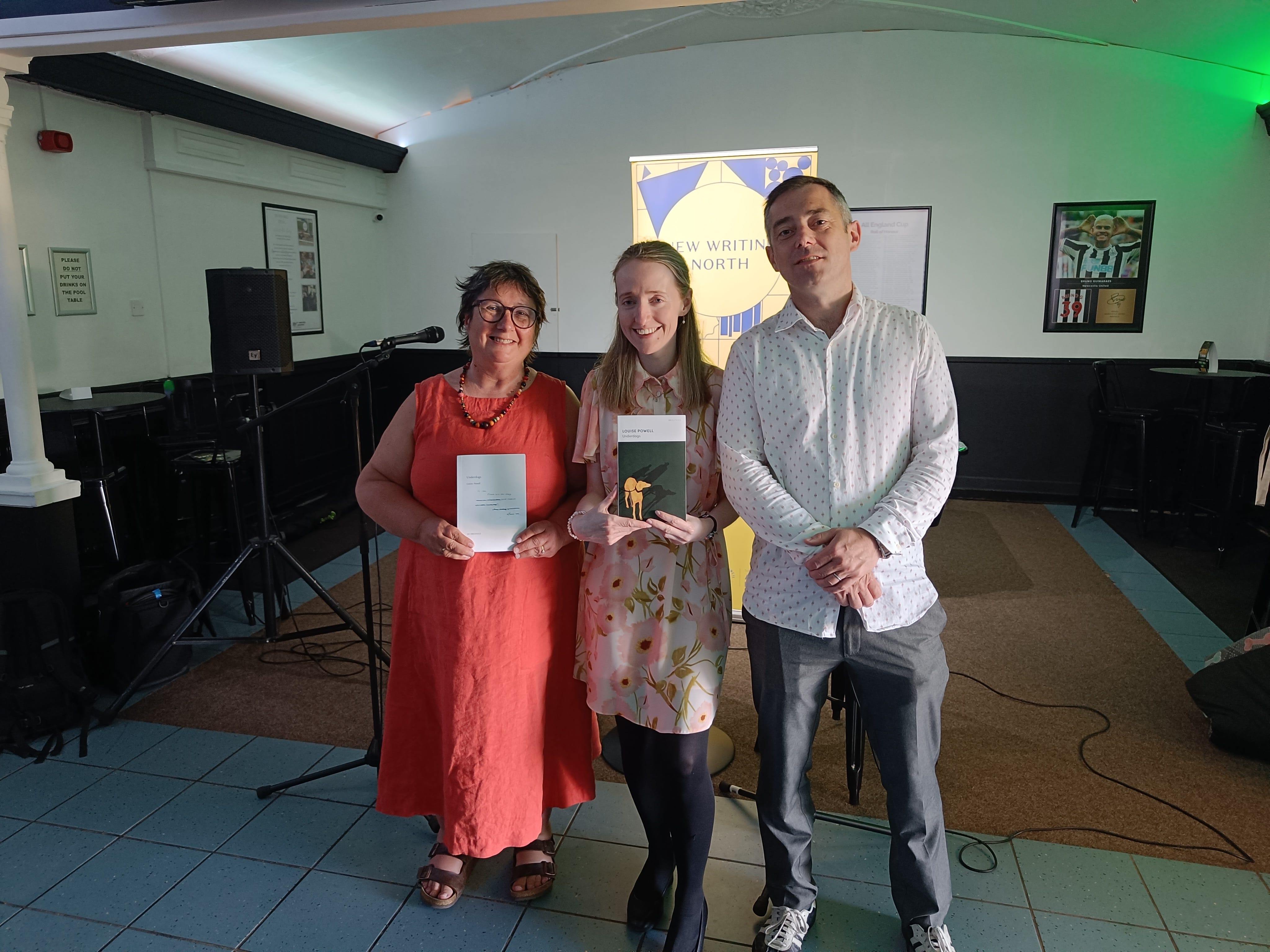
I’ve known July’s guest author for years! I think we first hooked up on Twitter, but I have a particular affinity for Louise’s work as a working-class writer from the north-east of England, and more specifically as Underdogs is set in Easington Colliery. I was 22 when I worked in the special school at Easington. It was the year after the miners’ strike, and working in the town had a profound effect on me. A community shattered, yet strong. It was with immense pleasure that I attended Louise’s launch for Underdogs at Newcastle Greyhound Stadium to meet her and Shaun Wilson Uncut (whose debut Malc’s Boy has also just been published) who interviewed her.
But enough of me! Let’s hand over to Louise, who will tell us all about Underdogs.
What is your book about, and what themes do you cover?
Underdogs is a literary fiction novel which follows ten-year-old George and his long-term unemployed dad, Reg, as they become involved in a gambling ring led by charismatic former miner Bertie. Told from George’s point-of-view and written totally in County Durham dialect, it’s set in 1998. It’s partly inspired by my experiences growing up among the proudly working-class independent greyhound racing or ‘flapping’ community.
Early readers have called Underdogs ‘tender, fast-paced and witty’, with ‘larger-than-life characters that felt like family to me’. It covers themes of family, community, class, post-industrial masculinity, and what it means to be a child in a very adult world.
Where did the idea for your book come from?
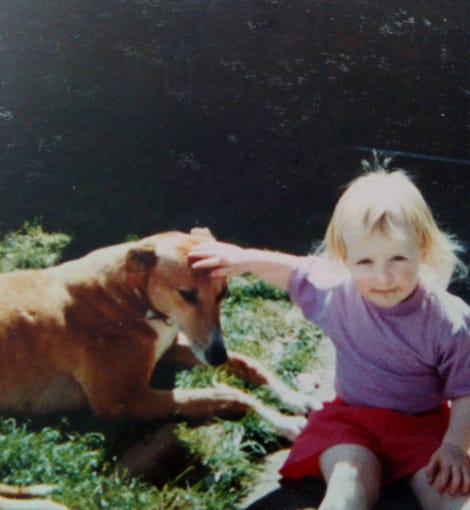
I grew up in the flapping community, helping my family to train and race our greyhounds Fly, Craig Noe, Fletcher and Molly, all of whom went on to live out long and happy retirements as our family pets. Flapping was a world full of colourful characters and magnificent dogs, but because I hadn’t seen worlds like mine represented in books, it took me a very long time to realise its literary potential.
In 2016, I saw a call-out for a screenwriting talent development programme called Significant Ink, which was being run by the brilliant New Writing North. I’d recently had a conversation about the word ‘flapping’, so decided to write a scene set at the dogs as part of my application. I got accepted onto the programme, which consisted of 5 weeks of introductory workshops. I then wrote a 30 page spec’ script which revolved around a woman who planned to land a gamble at the flapping track. The workshop facilitator told me that my script was one of the strongest ones on the course, but he didn’t think that production companies would be interested in the world, and there was far too much swearing in the script. That last note was an interesting one, as I don’t actually swear in real life, but I had to put it in the script to represent the world accurately!
After receiving those comments, I put the idea to one side and concentrated on working on my funded PhD, which looked at twins in seventeenth-century drama and history, as well as part-time tutoring, copyediting and academic reviewing jobs. While it was interesting work, I was deeply unhappy because it left me with no time, energy or headspace to write. For 18 months, I barely wrote a creative word – but when New Writing North put out another call-out for short memoir about working-class lives, I burned the candle at both ends to write an essay about what it was like to be a six-year-old girl in the flapping community.
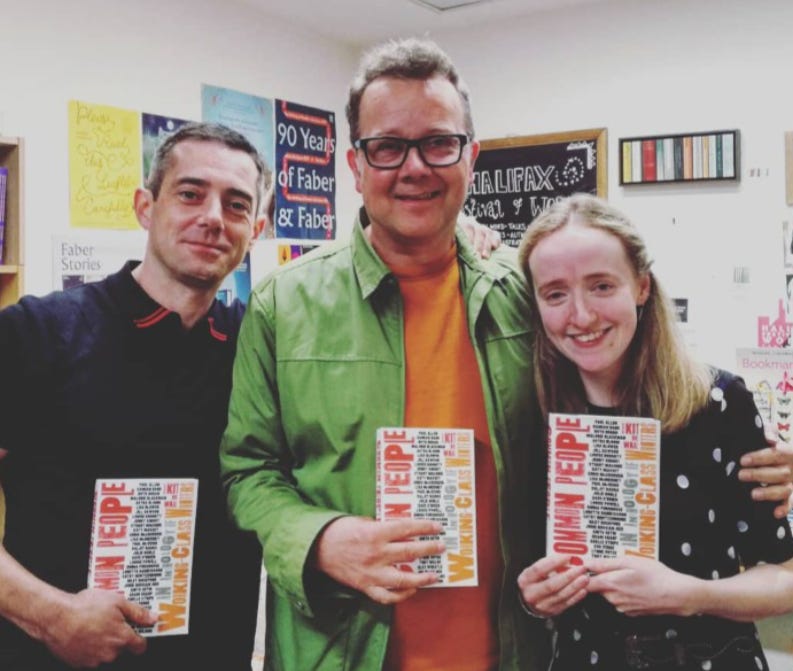
The piece, ‘This Place is Going to the Dogs’, got accepted for publication into Kit de Waal’s acclaimed Common People anthology. Publication came with a truly transformative package of ‘demystifying the industry’ workshops, literary festival events and mentoring. I hadn’t given much thought to bigger projects until Will Mackie at NWN asked me what I might like to work on, so he could set my mentoring up. I told him that I wanted to write a book set in the flapping world, but had no idea how to do it. I expected Will to tell me to try something else, but he told me that he thought it was a good idea, and set up mentoring with Carmen Marcus, who encouraged me to dig deep into the world and experiment until I found the voice and the story I needed to tell.
It took me 6.5 years from that point to write Underdogs, but the two minor bookmaker characters from the spec’ script which I’d thought was useless ended up finding their way into the novel.
Tell us about your writing process.
I wrote Underdogs almost totally in longhand because I needed to ‘feel’ the rhythm and the poetry of the voice in order to get it right. I’d write a couple of paragraphs, type them up, print them, edit them with pen and paper, type up the edits, reprint, repeat the process until I was happy, then move onto the next chunk of writing. It was a necessarily slow and careful process, one which enabled me to really understand the nuts and bolts of crafting a voice, structuring a novel, and character arcs.
Looking back at the process, what surprises me is my bravery in discarding drafts which weren’t working. I wrote around 9 drafts of between 12,000 – 50,000 words before I found the voice, premise, framing and characters that could best tell this story. I think that shows great trust in my storytelling instinct, as well as patience – traits I want to carry forward into future books.
What was the hardest part?
There were many times during the writing of Underdogs when I gave myself a really hard time for not writing a certain number of words a day, or not having a full draft. I’d tell myself repeatedly that I was a terrible writer; that everything else I’d created up to that point had been a fluke, and I was now going to be ‘caught out’. That I was going to let down all of the people and organisations who’d put faith in me, and I wasn’t worthy of their support and encouragement. It was a never-ending torrent of self-doubt which nearly creatively drowned me, and I was dealing with it alongside caring for my parents throughout life-threatening illnesses, and working as a fully self-employed freelance creative.
It’s only now I look back that I understand that the things I saw as failures – the experiments, the restarts, the discarded drafts – are actually an intrinsic part of the creative process. I now know that I was crafting a very rhythmic, dialect voice which breaks Standard English rules of grammar, structure, punctuation and tense, and that needed a lot of time to come together. I also realise that the ‘voice crafting’ stage is the one where I really get to know the characters and the world, and that when I’m in this stage of the process, 50 words a day is excellent.
A lot of writers speak about their debuts as novels which just ‘appeared’, but that definitely wasn’t my experience. Every syllable of Underdogs was repeatedly sweated, frowned and cried over; every comma and semi-colon battled for. I’d hope that this level of care is plain to see in the final book, but I’d also hope that I can achieve that quality without being so vicious towards myself when it comes to my second novel.
How did you get an agent and a book deal?
It took me 6.5 years to write Underdogs, but my experience of getting an agent was a very unusual one in that I didn’t query agents. When I won the Sid Chaplin Northern Writers’ Award in 2023, Elise Middleton of YMU Literary messaged me on Twitter (now X) to congratulate me and ask me whether I was open to a conversation about representation. I told her that I was, and I’d also had some interest from another agent, but I only had 50,000 polished words of the manuscript. To my surprise, Elise said that she’d be happy to read the first 3 chapters and synopsis of what I had.
After reading my submission package, Elise asked to meet me over Zoom. I was really impressed by the respect that she had for me as a writer, and for the community who had inspired my book. She offered me representation off the back of those 3 chapters and synopsis, and told me that she was happy to give me the time I needed to finish my book. She also offered me a meeting with Amanda Harris, then-head of YMU Literary, so that I could find out more about their remit and ask any further questions. Elise stressed that I was free to take as much time as I needed to weigh up the interest from the other agent and make the decision that felt right for me.
After a lot of deep thought and some conversations with people I trust, I signed with Elise and YMU Literary in August 2023. I then sent Elise my novel in monthly ‘instalments’ until I finished the full ‘polished’ draft in May 2024. I worked on structural edits in response to Elise’s notes from June – September 2024, then did a very quick line edit across 3 days in October 2024. I told Elise that I felt that the novel was ready to go, and she agreed – so on 13th November 2024, she sent Underdogs out on submission to over 30 editors. Being out on submission was torturous, with each working day feeling a month long, but on 3rd December 2024, Elise gave me the incredible news that Abi Scruby of John Murray Press wanted to buy my book!
How about marketing – any top tips?
For me, it’s not so much marketing as building meaningful connections with other people who share my interests. I see that as a two-way street and enjoy getting to know my fellow writers and greyhound enthusiasts; engaging with their posts and celebrating their successes. Time is an extremely precious thing, so I’m always very grateful whenever somebody chooses to spend some on my work and I like to let them know that I appreciate that.
What would you say to someone starting on their writing journey?
Don’t be hard on yourself if writing projects take longer than expected. It’s really important to give your project the time and care it needs, even if that might be frustrating. As impossible as it may feel now, the project will one day be finished, and the patience that you showed it will shine through.
It’s also important to remember that what you read in books is the final draft of a text that a lot of people - agents, editors, copyeditors, proofreaders - have worked with the author on. I used to think that I was just a bad writer until I realised that all of those wonderful first pages started off as messy drafts that got honed again and again until every word and image was worthy of its place.
Finally, treat the beginning of your writing journey as a precious opportunity to learn: to experiment with new forms, get an understanding of structure, and meet other writers. There’s a lot of fun, community and joy to be had in this part of your journey, and any time you spend in learning new skills or writing different pieces isn’t time wasted - it’s time invested.
Good luck, and enjoy yourselves! Louise. x
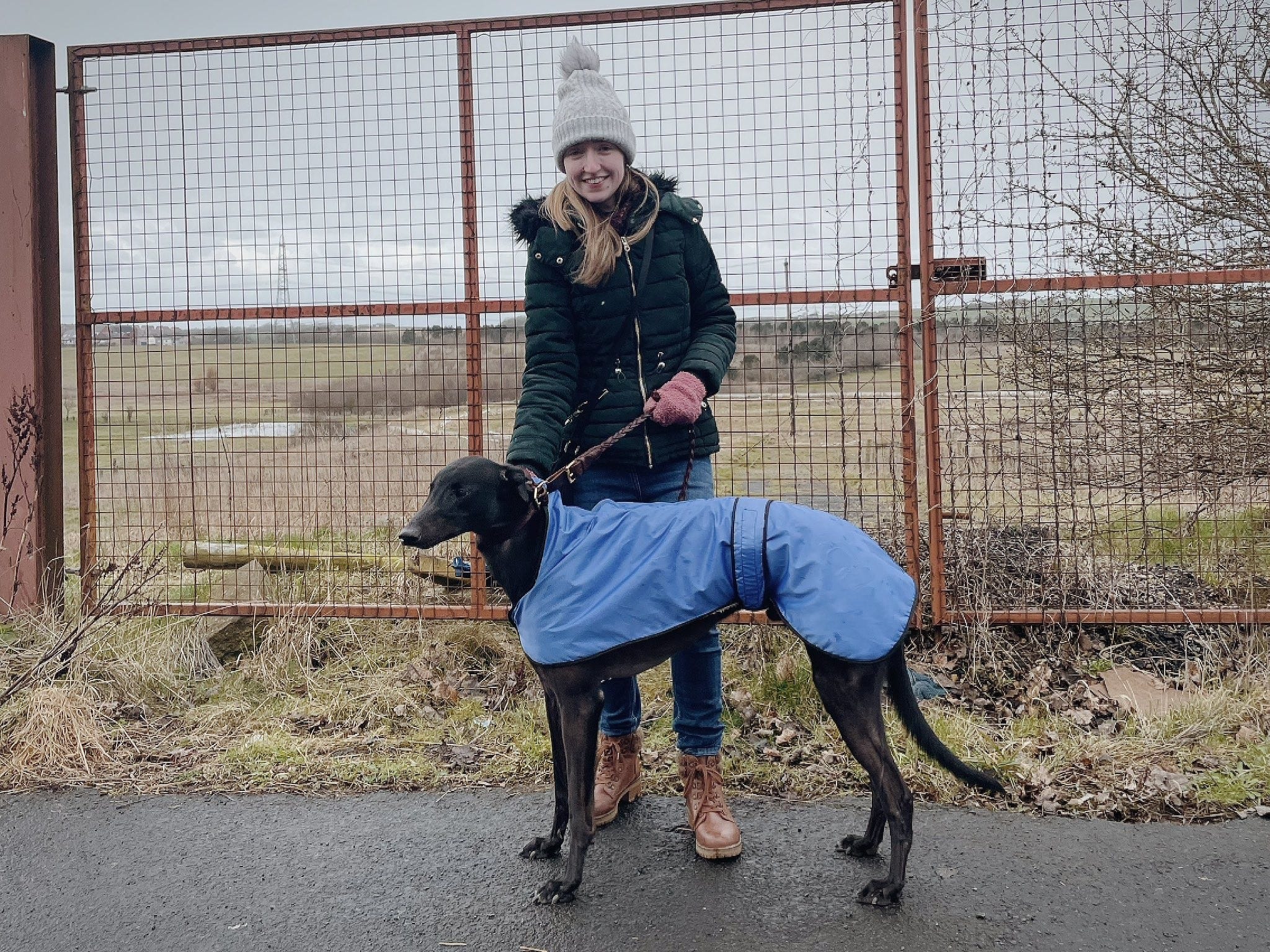
We wish Louise the very best as Underdogs goes out into the world. Here’s where you can follow her.
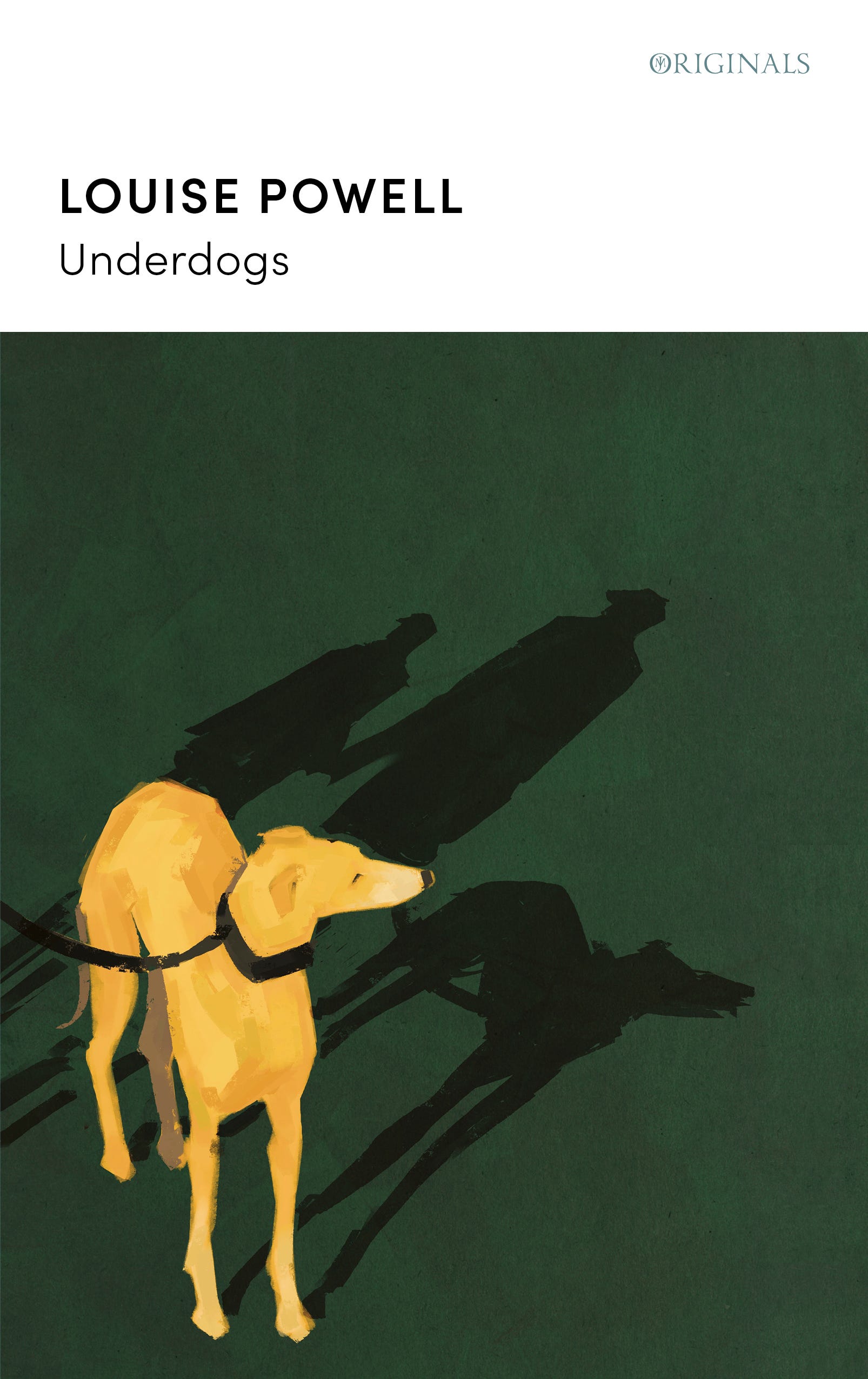
Do give this post a share and give Underdogs and Louise the exposure they deserve.
Thanks for reading this month’s edition from The Book Room. Do get in touch if you have a book coming out into the world and would like a slot in The Book Room. I’m now taking bookings for 2027 - January and February are taken, but free so far, after that.
Love to all,

What a journey! And I love the artwork.